Topaz Specimens: Imperial, Blue and Colourless Crystals
Topaz specimens range from prized orange-pink imperial crystals from Ouro Preto, Brazil, to natural pale blue, colourless and rare Pakistani pink material, though most vivid blue topaz sold today is irradiated and heat-treated, a treatment every honest listing must disclose.
Table of contents
- Topaz Chemistry, Crystal System and the Hardness-Cleavage Paradox
- Imperial Topaz: Colour, Chemistry and Why Ouro Preto Sets the Standard
- Blue Topaz: Natural Pale Colour vs Irradiated-and-Heat-Treated Market Material
- Colourless Topaz: The Overlooked Majority
- Pink Topaz: Natural Katlang Material vs Heat-Treated Imperial
- Mohs 8 but Perfect Basal Cleavage: Why Topaz Still Needs Careful Handling
- Treatment Disclosure: Irradiation, Heat and What Buyers Are Owed
- Key Topaz Localities: Russia, Namibia, Pakistan and Beyond
- Grading Topaz Specimens: Crystal Form, Termination and Matrix
- Topaz vs Quartz, Citrine and Other Lookalikes
- Caring for and Displaying Topaz at Home
- Buying Topaz: Price Bands, Disclosure Questions and Red Flags
Topaz is aluminium fluorosilicate, Mohs hardness 8, with one perfect basal cleavage — hard enough to resist scratching yet prone to splitting from a poorly aimed blow. It ranges from prized orange-pink “imperial” crystals from Ouro Preto, Brazil, to natural pale blue, colourless and rare natural pink Pakistani material; most vivid blue topaz sold today, however, is irradiated and heat-treated, a treatment that must be disclosed.
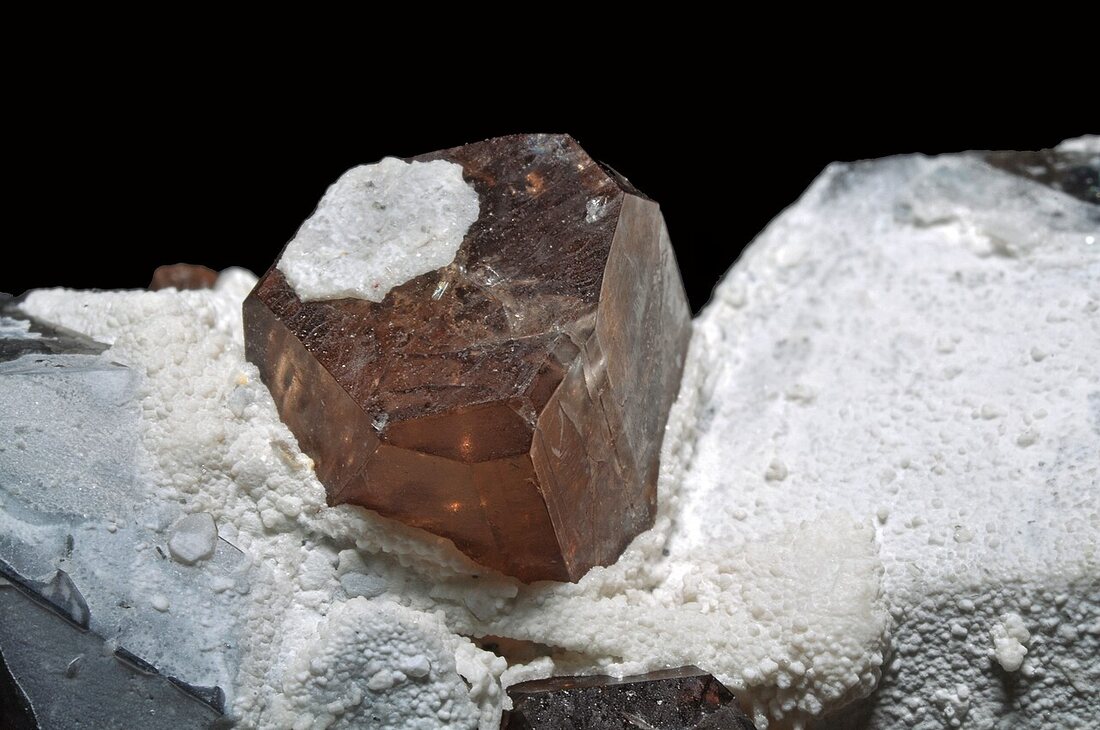
Topaz Chemistry, Crystal System and the Hardness-Cleavage Paradox
Topaz is an aluminium silicate with fluorine and hydroxyl, Al₂SiO₄(F,OH)₂, crystallising in the orthorhombic system. The ratio of fluorine to hydroxyl in the structure varies between deposits and has a subtle influence on colour and stability, but the defining collector fact about topaz is simpler: it is the reference mineral for hardness 8 on the Mohs scale, sitting between spinel and corundum, and resists scratching from quartz, steel and almost everything short of sapphire or diamond.
That hardness creates a false sense of security, because topaz also has a single, perfect cleavage plane parallel to its base (the {001} face). Hardness measures resistance to scratching; cleavage measures the tendency to split along a specific atomic plane of weakness — the two properties are unrelated, and topaz is the textbook example of a mineral that is simultaneously very hard and surprisingly easy to break in exactly the wrong direction. Historically, lapidaries exploited this deliberately, cleaving large rough crystals to remove included fractures before faceting; today, that same cleavage is the single biggest handling risk for anyone who owns an uncut topaz crystal.
Topaz also carries a comparatively high specific gravity for a silicate, typically around 3.49–3.57, noticeably denser than quartz (roughly 2.65) — a useful, if rough, hand-test when a crystal’s identity is uncertain, since a topaz crystal feels distinctly heavier than a quartz crystal of the same size. It is doubly refractive with a moderate refractive index (around 1.61–1.64) and, in gem-quality rough, a bright vitreous lustre on fresh faces that dulls only very slowly with handling, which is part of why well-formed natural crystals remain attractive as specimens even when they are never faceted.
Imperial Topaz: Colour, Chemistry and Why Ouro Preto Sets the Standard
“Imperial topaz” describes a specific colour range — orange, pink-orange and reddish “sherry” tones — rather than a separate mineral species; chemically it is identical to colourless or blue topaz. The name is often traced to nineteenth-century Russian court folklore that reserved pink topaz from the Ural Mountains for the royal family, though the historical record on that story is thin. What is not in doubt is the modern locality: commercially significant imperial topaz comes almost exclusively from the Rodrigo Silva mining district near Ouro Preto, Minas Gerais, Brazil, including the historic Capão do Lana and Vermelhão workings, which together are often described as the only source of true imperial topaz in commercial quantity anywhere in the world.
Colour in imperial topaz is attributed to a combination of trace chromium and structural colour centres, and much of the material on the market has been carefully heat-treated to shift brownish or yellow rough toward the pink and orange-red tones collectors prize most — a long-accepted, disclosed practice in the Brazilian trade rather than a concealment. Fine, richly saturated imperial crystals with sharp terminations are among the most valuable topaz specimens sold, and our guide to locality and provenance explains why that single Brazilian district carries so much weight in valuation.
Across all of these colour categories, the practical question for a buyer is always the same: what caused this colour, and has it been altered? The table below summarises the main varieties side by side before the following sections examine blue, colourless and pink material individually in more depth.
| Variety | Colour cause | Typical treatment status | Key localities |
|---|---|---|---|
| Imperial (orange–pink–sherry) | Trace chromium and structural colour centres | Often heat-treated from brownish/yellow rough; disclosed trade norm | Ouro Preto, Brazil |
| Blue | Structural colour centres induced by radiation | Natural blue is pale and rare; vivid market blue is irradiated and heat-treated | Brazil, Nigeria, Namibia (natural); global (treated) |
| Colourless (“silver”) | Absence of chromophores | Untreated; the majority of mined topaz | Pakistan, Russia, Namibia, Brazil |
| Pink | Trace chromium; or induced by heating brownish rough | Natural (Katlang) or heat-treated (from imperial) | Katlang, Pakistan (natural); Ouro Preto (treated) |
Blue Topaz: Natural Pale Colour vs Irradiated-and-Heat-Treated Market Material
Natural blue topaz exists, but it is typically a very pale, washed-out blue and considerably rarer than most buyers assume. The saturated “Swiss blue,” “London blue” and “sky blue” topaz seen throughout the jewellery trade is, in the overwhelming majority of cases, colourless rough that has been irradiated — historically by neutron bombardment in a nuclear reactor, or more commonly today by electron-beam or linear-accelerator irradiation — and then heat-treated to stabilise the resulting colour.
Reactor-irradiated material must clear a mandated post-irradiation decay period before release to the market under nuclear-regulatory rules, so responsibly sourced treated topaz on sale today carries no meaningful radioactivity; the issue for collectors is one of disclosure and value, not safety. A specimen described simply as “blue topaz” without qualification should prompt a direct question about treatment, since natural, untreated blue topaz commands a real premium precisely because of its rarity — a distinction covered in more general terms in our article on telling treated from natural specimens.
The industry generally recognises a handful of named blue tiers by depth of colour — pale “sky blue,” medium “Swiss blue,” and the deepest “London blue,” roughly in ascending order of saturation and, generally, price. It is worth remembering that these names describe the finished treated colour rather than any natural grading system, so their presence in a listing is itself a strong hint that irradiation and heat treatment are involved, even when the listing does not say so explicitly.
Colourless Topaz: The Overlooked Majority
Most topaz mined worldwide is colourless, sometimes called “silver topaz” in older trade literature, and historically it was cut and sold as an inexpensive diamond simulant on account of its hardness and glassy lustre. As specimens rather than cut stones, colourless topaz crystals are frequently underrated: a sharp, gemmy, undamaged crystal from a productive pegmatite pocket in Brazil, Pakistan or Russia can be a genuinely fine piece, valued for crystal form, transparency and termination quality rather than for colour, which is simply absent from the equation.
Because colour cannot carry the value in colourless material, condition and geometry matter disproportionately — a slightly chipped colourless topaz loses far more of its appeal, relatively speaking, than an equally chipped but richly coloured imperial crystal would. Collectors who focus on form over colour often build some of the most technically interesting cabinets in the field, since a flawless, glassy, doubly terminated colourless crystal showcases topaz’s crystallography with nothing else competing for attention.
Pink Topaz: Natural Katlang Material vs Heat-Treated Imperial
Natural pink topaz is genuinely rare, and the single most important source of untreated pink and pale pink-tinged colourless crystals is the Katlang district (including the well-known Ghundao Hill workings) in Mardan District, Khyber Pakhtunkhwa Province, Pakistan, alongside fine colourless and pale “imperial-like” material from the same pegmatites. This natural Pakistani pink is prized specifically because it requires no treatment at all — a meaningfully different proposition from the more common route to pink topaz, which is heat-treating brownish or yellow Brazilian imperial rough until it shifts toward pink.
Both are legitimate, saleable material, but they should never be priced or represented identically: untreated natural pink from Pakistan is the rarer and generally more valuable of the two, and any listing describing “pink topaz” should specify which route produced the colour.
Katlang production is also notable for how it is worked: much of the material historically came from small-scale, artisanal digging in weathered pegmatite exposures on Ghundao Hill rather than large mechanised mining, which limits annual supply and helps explain why fine, gemmy, undamaged natural pink crystals of any real size remain genuinely scarce on the specialist market.
Mohs 8 but Perfect Basal Cleavage: Why Topaz Still Needs Careful Handling
It is tempting to treat a Mohs 8 mineral as close to indestructible, and in terms of scratch resistance that instinct is broadly correct — topaz will comfortably outlast quartz, glass and most metal tools in day-to-day contact. Its single perfect cleavage plane, however, means a sharp perpendicular knock, an uneven grip during handling, or a sudden thermal shock can shear a crystal cleanly along its base, producing a flat, glassy break that looks almost too clean to be damage. This is precisely why cut topaz gemstones are set with extra care in jewellery, and why raw crystal specimens deserve the same caution collectors would give a piece with far lower nominal hardness.
Practical handling rules follow directly from the cleavage geometry: always support a topaz crystal along the length of its prism rather than gripping only the termination, avoid dropping it even a short distance onto a hard surface, and avoid moving a specimen quickly between very different temperatures — for example, from a cold car directly into a warm, sunlit display case.
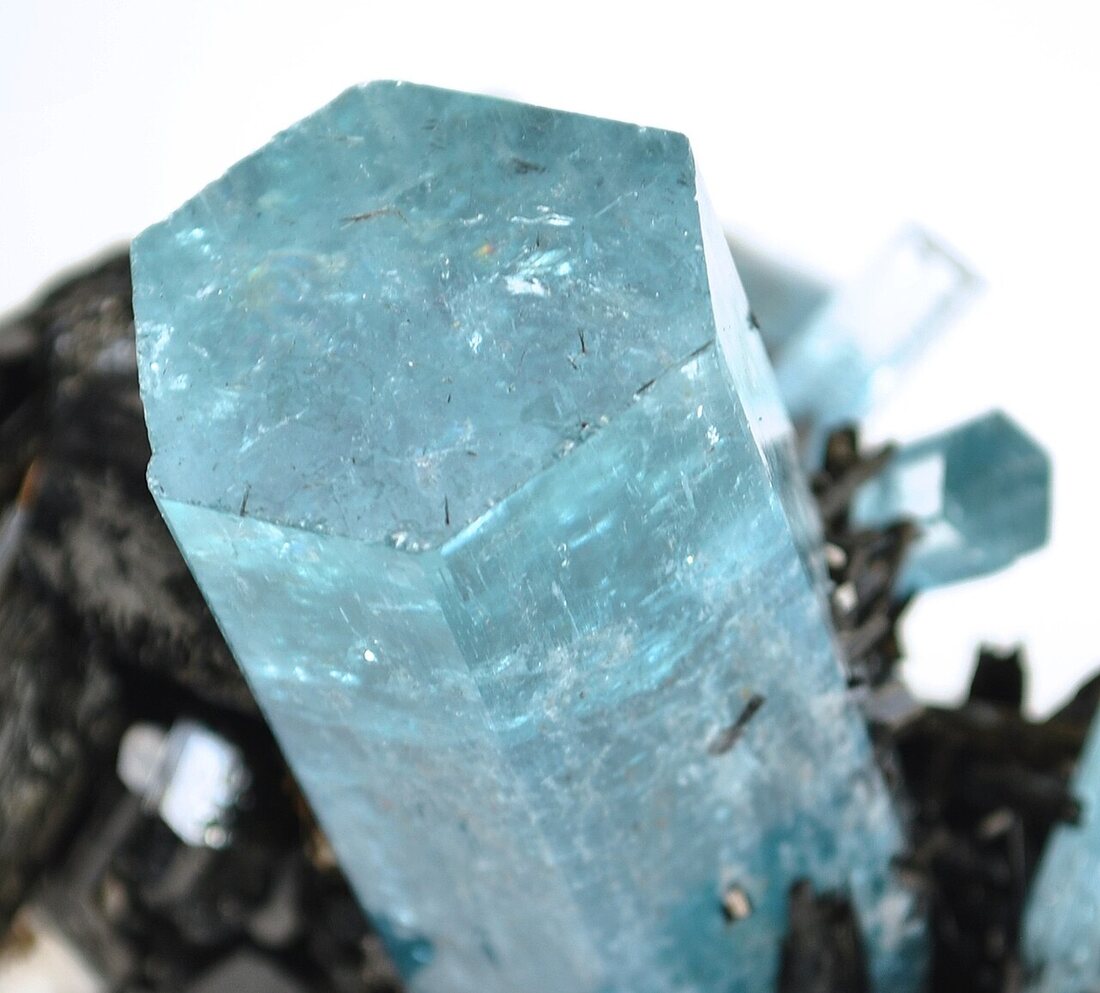
Treatment Disclosure: Irradiation, Heat and What Buyers Are Owed
Because both irradiation (for blue) and heat treatment (for pink and some imperial material) are so widespread and so undetectable to the naked eye, disclosure is the single most important piece of information a buyer cannot verify independently. Reputable dealers state treatment status as plainly as they state locality, and serious buyers should treat an unqualified colour claim — “blue topaz,” “pink topaz” — as an incomplete listing rather than a complete one.
Treatment is not a defect; undisclosed treatment is. A well-treated blue topaz crystal, honestly labelled, is a perfectly legitimate specimen — the problem arises only when treatment is hidden and priced as though it were natural rarity.
This is the same principle behind Olemina’s grading approach generally, set out in full on our grading standards page: locality, treatment and condition are stated plainly on every listing, in keeping with the trade norms established by major gemmological authorities such as the Gemological Institute of America.
Key Topaz Localities: Russia, Namibia, Pakistan and Beyond
Beyond Brazil’s imperial topaz and Pakistan’s Katlang district, several other localities matter to collectors. Russia’s Ural Mountains have a long history of topaz production, including the Sanarka River placers historically associated with fine pink “Sanarkinsky” crystals and the Murzinka pegmatite field known more broadly for gem pegmatite minerals including blue and colourless topaz. Namibia’s Erongo region, particularly around Klein Spitzkoppe, has become an important modern source of gemmy, sharply terminated colourless and pale blue-tinted topaz crystals, often associated with aquamarine and prized by specimen collectors for exceptional crystal form as much as for colour.
Smaller but notable producers include Nigeria, source of attractive champagne and blue material, and the United States, where the Thomas Range in Utah is famous for small but vividly coloured red-to-pink topaz in volcanic cavities, and Pikes Peak, Colorado produces sherry-toned crystals in rhyolite pockets. Each locality tends to favour a particular habit and colour range, which is exactly the kind of provenance detail that separates a documented specimen from an anonymous one.
Habit itself varies by locality in ways worth learning: Brazilian imperial topaz tends toward stubby, prismatic crystals with well-developed pyramidal terminations; Pakistani and Namibian material more often forms longer, slender prisms with a simpler termination; and the small, intensely coloured crystals from Utah’s volcanic cavities are prized specifically for their unusual gem-cavity origin, which is quite different from the pegmatite-pocket growth environment that produces most other fine topaz.
| Locality | Typical material | Notable feature |
|---|---|---|
| Ouro Preto, Minas Gerais, Brazil | Imperial topaz — orange, pink, sherry tones | Only major commercial source of true imperial topaz |
| Katlang / Ghundao Hill, Pakistan | Natural pink and colourless crystals | Rare untreated pink material, no treatment needed |
| Ural Mountains, Russia | Historic pink (Sanarka) and blue/colourless pegmatite topaz | Classic 19th-century imperial topaz association |
| Erongo / Klein Spitzkoppe, Namibia | Gemmy colourless to pale blue-tinted crystals | Exceptional sharp terminations, often with aquamarine |
Grading Topaz Specimens: Crystal Form, Termination and Matrix
Because so much topaz on the specimen market is colourless or only lightly coloured, crystal geometry carries more of the grading weight than it does for a naturally vivid mineral. A fine-grade topaz specimen should show a complete, undamaged termination and reasonable transparency; premium grade adds larger size, sharper faces and stronger, more even colour where colour is present; exhibition grade combines exceptional size, gem clarity, striking colour saturation (in imperial or natural pink material especially) and, where available, an intact matrix — genuinely rare for topaz, since it typically forms in open pegmatite pockets that leave little matrix attached.
Because “gem grade,” “museum grade” and similar terms are used loosely across the trade, we set out our exact tier definitions on our standards page, apply them consistently across our collection, and expand on tier definitions generally in our grades explained guide; unfamiliar terms are defined in our glossary.
Internal fractures deserve particular attention when grading topaz, since the same perfect cleavage that makes handling risky in transit can also leave faint internal cleavage cracks from the specimen’s original extraction, long before it ever reaches a buyer. A loupe or strong light held at a raking angle will usually reveal these as thin, flat, highly reflective planes inside an otherwise clear crystal — a feature worth checking for on any topaz purchase above entry level, since it can meaningfully affect both durability and value even when the crystal looks flawless from a normal viewing distance.
Topaz vs Quartz, Citrine and Other Lookalikes
Topaz has long been confused with quartz varieties in the trade, most notoriously through the old and now-discouraged name “Madeira topaz” applied to heat-treated citrine, and “smoky topaz” applied to smoky quartz — neither is topaz at all. The distinction is straightforward with basic tests: topaz is Mohs 8 with one perfect cleavage and a specific gravity around 3.5–3.6, while quartz is Mohs 7, has no cleavage (it fractures conchoidally, like glass), and is noticeably less dense. Our guide to natural versus heated citrine covers the parallel treatment-disclosure issues that affect quartz varieties in more detail, since the underlying buyer questions — is this natural, and has it been treated — are nearly identical across both minerals.
Danburite, a less common calcium borosilicate, is another occasional lookalike: it forms similar colourless prismatic crystals but is softer (Mohs 7) and lacks topaz’s cleavage, which is one of the more reliable ways to tell the two apart without instrumentation. Phenakite is a rarer third lookalike, harder again than topaz at Mohs 7.5–8 with no cleavage at all, so a specimen sold under an unfamiliar name is always worth confirming against these basic physical properties before assuming the label is correct.
Caring for and Displaying Topaz at Home
Topaz specimens display beautifully given their transparency, colour range and often striking prismatic form — genuine centrepiece material for a considered collection, an idea explored further in our thinking on statement mineral pieces in interiors. In practical terms, keep topaz away from repeated hard knocks given its cleavage risk, avoid ultrasonic jewellery cleaners, which combine vibration with the exact kind of mechanical stress cleavage planes are least able to absorb, and avoid extended, intense direct sunlight, since some irradiated-and-heat-treated blue material has been observed to fade very gradually under prolonged strong UV exposure over years, even though the treatment itself is considered stable under normal conditions. A dedicated, felt-lined display case away from a south-facing window is a simple, effective compromise: the crystal remains visible and well lit without years of cumulative direct sun exposure.
| Action | Do | Don’t |
|---|---|---|
| Cleaning | Soft cloth or brush; mild soap and lukewarm water if needed | Ultrasonic cleaners — vibration risks the basal cleavage plane |
| Handling | Support along the prism length with two hands | Gripping only the termination or applying uneven pressure |
| Environment | Stable indoor temperature, moderate indirect light | Prolonged intense direct sun; rapid hot-to-cold moves |
| Storage | Individually wrapped, padded, separated from harder gem minerals | Loose in a drawer where corundum or diamond-bearing pieces can chip it |
Buying Topaz: Price Bands, Disclosure Questions and Red Flags
Topaz price bands vary enormously by variety, treatment status and origin. Fine natural, untreated blue crystals and genuine natural pink Katlang material typically command a real premium over routinely treated equivalents; well-formed, richly coloured imperial topaz from Ouro Preto sits at the upper end of the market, particularly in larger, undamaged crystals; and colourless gem crystals remain the most accessible entry point for new collectors, priced mainly on size, clarity and termination quality rather than colour. All figures should be read as directional only, since fine-mineral pricing moves with current market conditions, size and individual specimen quality.
| Variety / quality tier | Typical crystal size | Indicative price band* |
|---|---|---|
| Natural, untreated blue topaz crystal | Thumbnail to miniature | Moderate to high — rarity premium |
| Irradiated and heat-treated blue crystal (disclosed) | Thumbnail to cabinet | Entry-level to moderate |
| Imperial topaz, fine colour, Ouro Preto | Thumbnail to miniature | Moderate to high, rising sharply with size and saturation |
| Colourless gem crystal, Pakistan/Russia/Namibia | Thumbnail to miniature | Entry-level to moderate |
| Natural pink, Katlang, Pakistan | Thumbnail | Moderate to high — genuine rarity |
Before buying, ask plainly: is the colour natural or treated, and if treated, by what method? What is the specific locality, and is it documented? Has the crystal been repaired or stabilised? Given topaz’s cleavage sensitivity, packing quality matters as much as it does for any fragile specimen — every piece we sell ships tracked and insured, with our approach to safe transit and our returns policy set out clearly, and our general guidance on spotting misrepresented listings is covered in our article on avoiding fakes and overpaying when buying minerals online.
Watch, too, for listings that lean on evocative but meaningless colour names — “Precious topaz,” “Super blue,” “Genuine imperial” — without stating an actual locality or treatment history behind them. A dealer confident in their material will generally volunteer this information unprompted, and its absence is itself a useful signal to slow down, ask directly, and compare the answer against what is known about how each variety is genuinely produced.
Frequently asked
- Is blue topaz natural or treated?
- Most blue topaz sold today started as colourless rough that was irradiated and then heat-treated to produce a stable blue colour. Naturally blue topaz exists but is typically much paler and considerably rarer. Reputable dealers disclose treatment status, and treated material is entirely safe once it has cleared required post-irradiation decay periods.
- What makes imperial topaz different from ordinary topaz?
- Imperial topaz refers specifically to orange, pink-orange and reddish sherry-coloured crystals, historically and still almost exclusively from Ouro Preto, Minas Gerais, Brazil. The name describes colour and origin rather than a separate mineral u2014 chemically it is the same aluminium fluorosilicate as colourless or blue topaz.
- Why does topaz break or chip even though it is so hard?
- Topaz's Mohs 8 hardness measures resistance to scratching, not resistance to breaking. It has one perfect cleavage plane parallel to its base, so a sharp knock, uneven pressure, or thermal shock in the wrong direction can split a crystal cleanly despite its high hardness.
- Is pink topaz natural or treated?
- Both exist. Natural pink topaz occurs at a small number of localities, most notably Katlang in Pakistan, and is prized as untreated material. Separately, some Brazilian imperial topaz is heat-treated from brownish or yellow tones to pink u2014 a disclosed, accepted trade practice distinct from natural pink material.
- How can you tell if a topaz specimen has been irradiated?
- Visually, you usually cannot u2014 irradiation and heat treatment produce stable colour changes with no diagnostic surface features. Disclosure has to come from the dealer or an accompanying lab report; buying from a source that states treatment status plainly is the only reliable safeguard.
- What is the difference between topaz and citrine or smoky quartz?
- Topaz (Mohs 8, one perfect cleavage) and quartz varieties like citrine or smoky quartz (Mohs 7, no cleavage) are entirely different minerals, though old trade names such as Madeira topaz for heated citrine caused lasting confusion. Genuine topaz is denser and harder, and lacks quartz's conchoidal fracture.
- Mindat.org — mineral & locality database
- International Mineralogical Association (IMA)
- Mineralogical Society of America
Mineralogical data (species, hardness, locality) cross-referenced against Mindat and IMA records.